
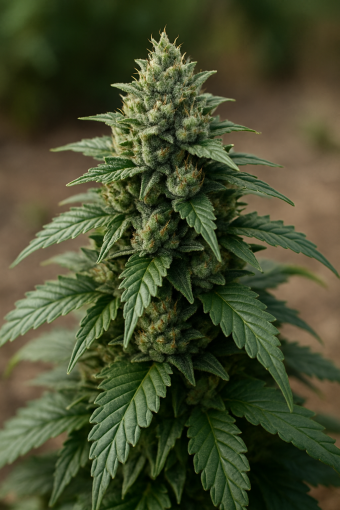
Afghan Feminized Seeds
Price range: $52.00 through $255.00
Afghan Feminized Seeds are a classic Afghan landrace-derived indica type known for compact structure, limited stretch, dense flower formation, and heavy resin production. Rather than representing one modern hybrid with a single fixed pedigree, Afghan genetics come from traditional cannabis populations associated with Afghanistan and the wider Hindu Kush region. This makes Afghan an important reference point for growers comparing short-flowering, broadleaf indica genetics with taller, more open sativa-leaning cultivars.
- Lineage: Traditional Afghan landrace-derived indica; no single modern hybrid pedigree
- Growth type: Indica-dominant, compact to medium-sized photoperiod plant
- Plant structure: Broad leaves, thick stems, tight-to-moderate internodal spacing, and strong lateral branching
- Stretch: Low to moderate compared with most sativa-leaning cultivars
- Indoor flowering: Typically about 7–9 weeks after the switch to a flowering light cycle
- Outdoor harvest: Typically late September to early October in the Northern Hemisphere; exact timing shifts with latitude, phenotype, and seasonal conditions
- Flower structure: Dense, compact clusters with substantial weight concentrated around the main stem and upper branches
- Resin production: High; mature flowers and nearby sugar leaves commonly develop heavy trichome coverage
- Colour: Typically deep green with orange-to-rust pistils; some phenotypes may darken or show purple tones under suitable conditions
- Aroma: Earthy, hash-like, resinous, spicy, peppery, woody and pine notes with occasional mild sweetness or fruit
- Best suited for: Growers prioritizing limited height, a relatively fast photoperiod finish, dense flowers, and classic resin-heavy Afghan characteristics
Afghan plants generally grow with a strong central stem and sturdy secondary branches rather than the long, widely spaced internodes common to Haze-type genetics. The canopy tends to remain compact and comparatively easy to control indoors. Broad foliage and close branch spacing can create a dense plant, so thoughtful pruning, leaf management, and good air movement can be useful where plants are grown close together. Vertical stretch during the transition to flower is usually restrained to moderate, which makes Afghan genetics particularly useful where ceiling height is limited or where a grower wants a predictable canopy.
Indoors, a practical flowering reference is approximately 7–9 weeks from the onset of the flowering cycle. Afghan-type plants usually build dense clusters around the main stem and upper branches, creating compact, weighty flowers rather than loose or highly elongated spears. Resin production is one of the defining characteristics of traditional Afghan genetics, and mature flowers plus nearby sugar leaves commonly carry substantial trichome coverage. Because the flowers can become very dense, airflow and humidity control become increasingly important in the final weeks.
Outdoors, the more useful timing reference is the expected harvest window rather than a fixed number of flowering weeks, because natural flowering begins according to declining day length and therefore varies with latitude. In the Northern Hemisphere, established Afghan-type selections are commonly ready from late September into early October. Plants in warmer, lower-latitude locations may begin and finish somewhat differently from plants grown farther north, and seasonal temperature, rainfall, and phenotype can shift harvest by a week or more. The relatively early finish is an advantage in regions where autumn weather deteriorates quickly, although dense flowers still warrant close attention during prolonged wet or humid conditions.
Yield is better understood in structural terms than through fixed numbers. Afghan plants are commonly productive because they concentrate substantial flower mass onto a relatively compact frame, but final output depends heavily on plant size, root volume, lighting, environment, training, and phenotype. The more dependable comparison points are the short-to-medium stature, limited stretch, dense flower set, strong branches, relatively quick indoor flowering period, early outdoor harvest window, and high resin production.
The aromatic profile is typically centered on earthy, resinous and hash-like notes, supported by pepper, spice, wood, pine, and occasional mild sweet or fruity undertones. Afghan Feminized Seeds are best suited to growers looking for a sturdy, space-efficient photoperiod plant with limited stretch, dense resinous flowers, an indoor bloom of roughly seven to nine weeks, and an outdoor finish that commonly falls around late September to early October in the Northern Hemisphere.